

Making as Ritual: Creativity, Embodiment, and Erotic Flow
What is the connection between art, creativity, and erotic flow?
In our society we carry many narratives about the “right way” to make art and the “right way” to do sex. We are told that if we want to improve, we must learn better technique, perform more skilfully, or perhaps accept that we are simply “not a natural” and should stop trying. As if being an artist or a lover is meant to come effortlessly, and if it does not, something must be wrong with us.
These narratives frame art and sex as performance. Something we do for other people, that must look a certain way and can be measured and judged. Making art and engaging in sex then become goals to achieve, with other people’s approval acting as the marker of success.
Of course, professionals can refine their skills and offer extraordinary experiences in these arenas. But their expertise does not mean you need to give up art or eros simply because someone appears to be doing it “better.”
Somewhere along the way many of us absorbed the message that we are not enough. Not talented enough. Not desirable enough. Not expressive enough. These stories live inside our heads, and they interrupt flow and pull us away from our own bodies and ourselves.
But I want to question them:
Enough for whom?
What if art and eros were available to you, for you?
What if art and eros were not about goals, performance, or technique, but about connection to your own authentic aliveness?
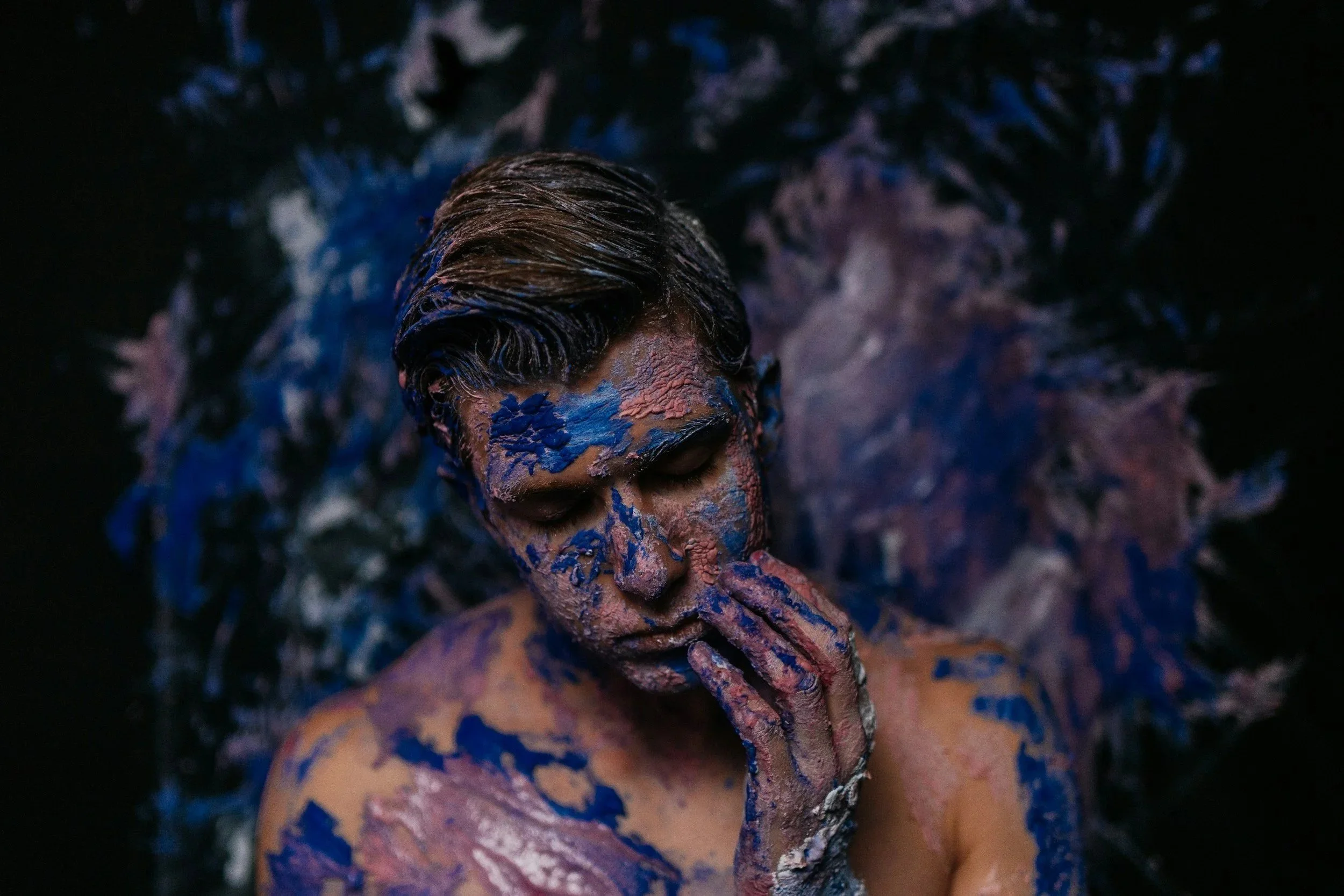
The Roots of Art and Eros
When I use the term art-making, I mean it broadly. I mean all forms of making and feeling with the body: pen to paper, dancing, singing, listening to music, knitting, or building a shed. Anything that is playful, sensory, enjoyable, stimulating, imaginative, or creative can be art. Art is emergent. It comes to life through many different mediums and creative processes.
Humans have been making art for a very long time. Long before galleries and institutions defined what counted as “fine art,” people were painting lines on rock walls, marking bodies with pigment, and shaping stone, wood, and clay. They were moving and singing the stories of their everyday lives and spiritual worlds. Art was not separate from living. It was ritual, communal, and embodied, and it still is.
Eros has always lived there too. Not simply as sexuality, but as the force that draws humans toward one another. It is the impulse to connect, to touch, to witness and be witnessed. It is the current that moves through shared rhythm, shared story, and shared sensation.
In communal ritual spaces, bodies gather, breaths synchronise, and hands work alongside one another. Expression becomes inseparable from belonging.
This is where art and eros meet.
What we express becomes significant not because it conforms to a cultural standard, but because it is alive and meaningful.
Engaging in Process
When I use my hands to make marks on a page or to explore pleasure on my skin, I am engaging in similar processes. I am activating sensation, curiosity, imagination and desire. I am responding to feedback from my body. I am moving in relationship with what is unfolding. This mindful embodiment is the ground where art and eros meet.
When I sat down to make this image, I had in mind what I wanted to say about this topic. Yet I also created space to connect to my own feelings and sensations.
I made the image for myself. That distinction matters.
I am sharing it not as a performance of skill or a product for you to consume or critique, but as an invitation for you to witness a unique expression. What matters here is the process. My process as creator and your process as witness.
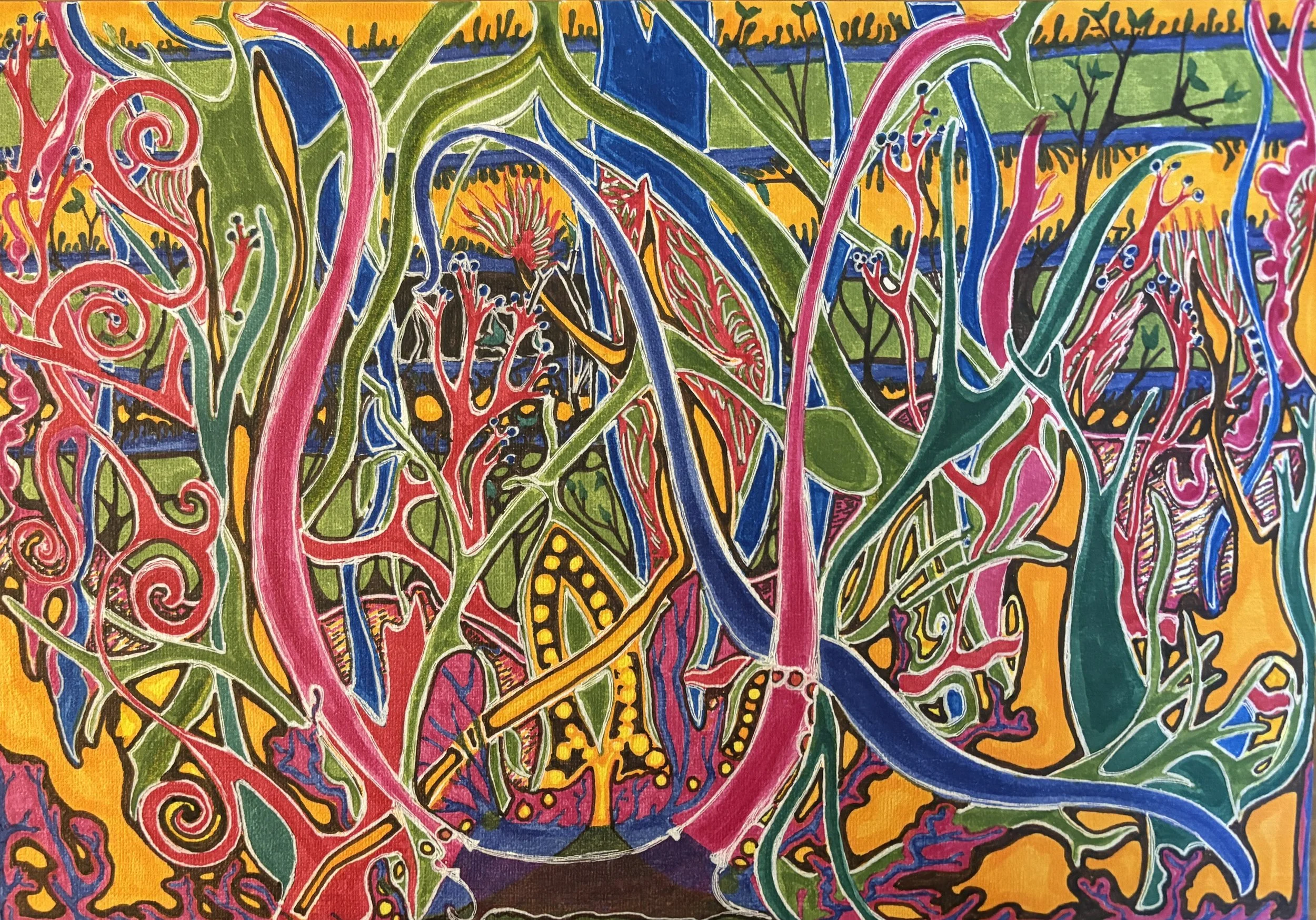
Original Artwork by Vanessa K Vance 2026
In my process I let go of trying to make “proper” art. I allowed the materials to meet the page as they wished. The process became a dialogue. Parts of me met each other through colour, line and space.
I noticed that I enjoyed the finer detail. I noticed moments where I wished something were different and moments where I felt content with what was taking shape. I could feel my breath moving with my hand and the ink pen across the page. At times I felt I had a lot to say and not enough time or space to say it.
I wanted the lines to have definition and I wanted each section to feel that it had a place and that it mattered.
When I finished, I stepped back and looked again.
What did I now see? How did I feel about it? What did I want from it and what was it trying to say to me?
Metaphors emerged and I felt a deeper sense of what this image was holding for me. It felt alive and purposeful, messy and contained, complete but not finished.
The way I moved through this creative process is similar to how embodied-erotic learning unfolds in the body. Just as we can shift from performing art to creating for ourselves, we can also shift from performing eros to experiencing it. When eros is framed as something to impress or satisfy an imagined audience, we lose access to its intimacy. But when we approach it as both creator and witness of our own experience, something changes. We become less concerned with how it appears and more attentive to how it feels.
When we engage with eros in this way, it is less about external validation and more about connection to self. It is about feeling something, dialoguing with our inner parts and body, and meeting ourselves more fully. It is about accessing something more real and alive.
You do not need advanced skills or analysis to benefit from this. Placing a single mark on a page, moving your feet to a rhythm of your choice, or following one deeper breath can be enough. What matters is staying present to what is emerging.
In that presence, subtle but significant shifts can occur. The nervous system can be nurtured through sensory, rhythmic and tactile engagement. Non-verbal feelings and sensations can be given expression. Reflection and meaning-making arise, supporting the integration of other experiences.
Art as Eros and Eros as Art
When we engage in artmaking with presence, we are not only creating an image or a sound or an object, but we are also cultivating internal capacities. Through the act of making, we practice attunement and responsiveness, learning to remain in relationship with the unfolding experience without falling back into old habits.
Art-making builds our capacity to feel more fully, to tolerate ambiguity, and to move between control and surrender. It teaches us to notice desire without rushing to resolve it and respond with curiosity. In this way, creativity becomes a practice ground for erotic flow. Over time, this strengthens our relationship with eros.
At the same time, eros itself is a form of art-making. Not something to perform, but something to inhabit.
The body becomes the living canvas and breath, sound, movement, touch, and awareness become the mediums through which something new can emerge.
Whether the intention is play, healing, intimacy, or communion, engaging erotically with embodied awareness allows something emergent to take shape in real time.
Both art and eros are acts of shaping and being shaped in service to our inner world. We might compose a soundscape of pleasure, sculpt the body in forms of self-love, or tell a story through movement and rhythm. All art and eros are acts of ritualised making.
Making as ritual is not about perfect outcomes. It is about returning again and again to the body in all its raw and messy beauty as a site of creativity and meaning.
Community and Belonging
When art and eros enter intentional communal spaces, their relational nature becomes even more tangible. Whether eros is explicitly at the centre of the room or quietly in the background, the same principles apply. Bodies gather, nervous systems attune and expression unfolds in relationship, influenced by those who witness and are witnessed.
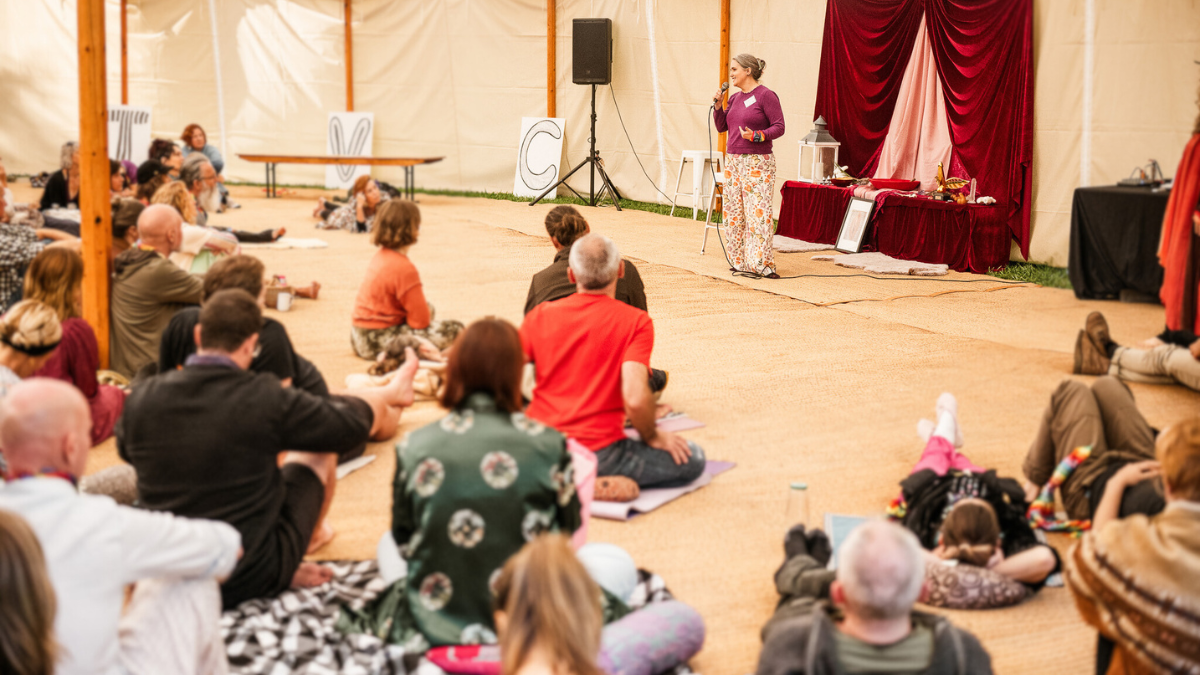
In well-held spaces, creative processes provide containment for intensity and space for play. Nervous systems co-regulate, increasing our capacity to stay present with sensation rather than withdrawing or escalating. Witnessing others expands our understanding of what is possible and reduces isolation. Experiences that may feel private or confusing alone can begin to make sense in shared reflection.
Communal spaces also support learning. We observe how others express desire, set boundaries, negotiate consent, and move in alignment with what is true for them. Capacity grows through participation rather than performace.
However art and eros move through you, this is what making as ritual offers: a way of making sense of experience, of belonging, and of coming home to the body in shared presence.

Experience This in Community
Is your body is longing for a space where creativity and eros can meet? I will be holding an art space at FEAST May 21st-24th 2026 in Northern NSW, where we explore these themes in embodied practice. Come and join us.
www.feastunlimited.com
Join my mailing list to receive updates about upcoming workshops and retreats exploring creativity, art-making, embodiment, and eros in intentional communal spaces.